
Use the buttons or left/right arrow keys. Open the image for a closer view, or read the text below.
Read this page as text
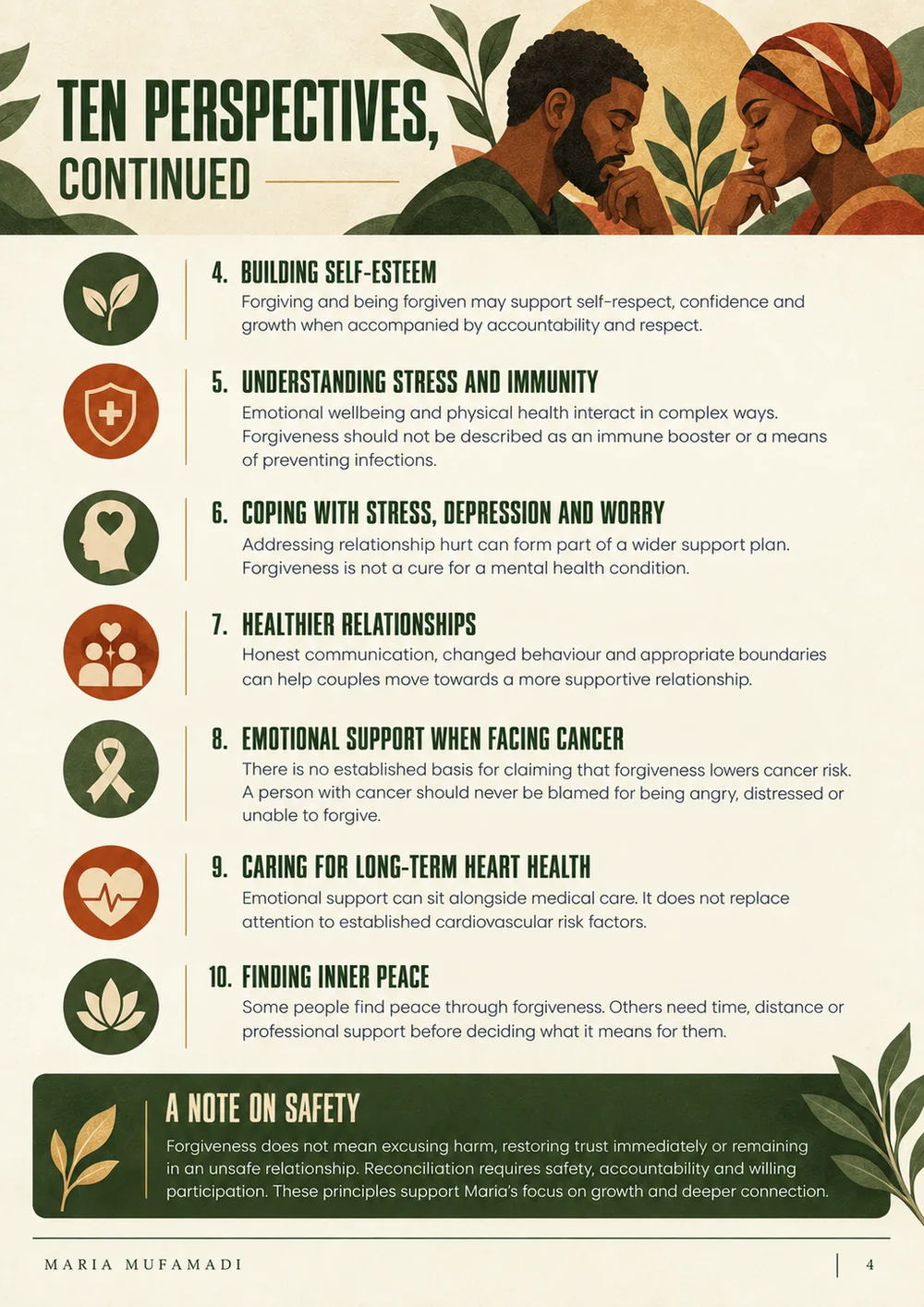
TEN PERSPECTIVES, CONTINUED
4. Building self-esteem
Forgiving and being forgiven may support self-respect, confidence and growth when accompanied by accountability and respect.
5. Understanding stress and immunity
Emotional wellbeing and physical health interact in complex ways. Forgiveness should not be described as an immune booster or a means of preventing infections.
6. Coping with stress, depression and worry
Addressing relationship hurt can form part of a wider support plan. Forgiveness is not a cure for a mental health condition.
7. Healthier relationships
Honest communication, changed behaviour and appropriate boundaries can help couples move towards a more supportive relationship.
8. Emotional support when facing cancer
There is no established basis for claiming that forgiveness lowers cancer risk. A person with cancer should never be blamed for being angry, distressed or unable to forgive.
9. Caring for long-term heart health
Emotional support can sit alongside medical care. It does not replace attention to established cardiovascular risk factors.
10. Finding inner peace
Some people find peace through forgiveness. Others need time, distance or professional support before deciding what it means for them.
A note on safety
Forgiveness does not mean excusing harm, restoring trust immediately or remaining in an unsafe relationship. Reconciliation requires safety, accountability and willing participation. These principles support Maria's focus on growth and deeper connection.